Theo Neumann · 10 October 2026
Mapping the Cultural Exchanges Sparked by Linencourt's Historic Market Fairs
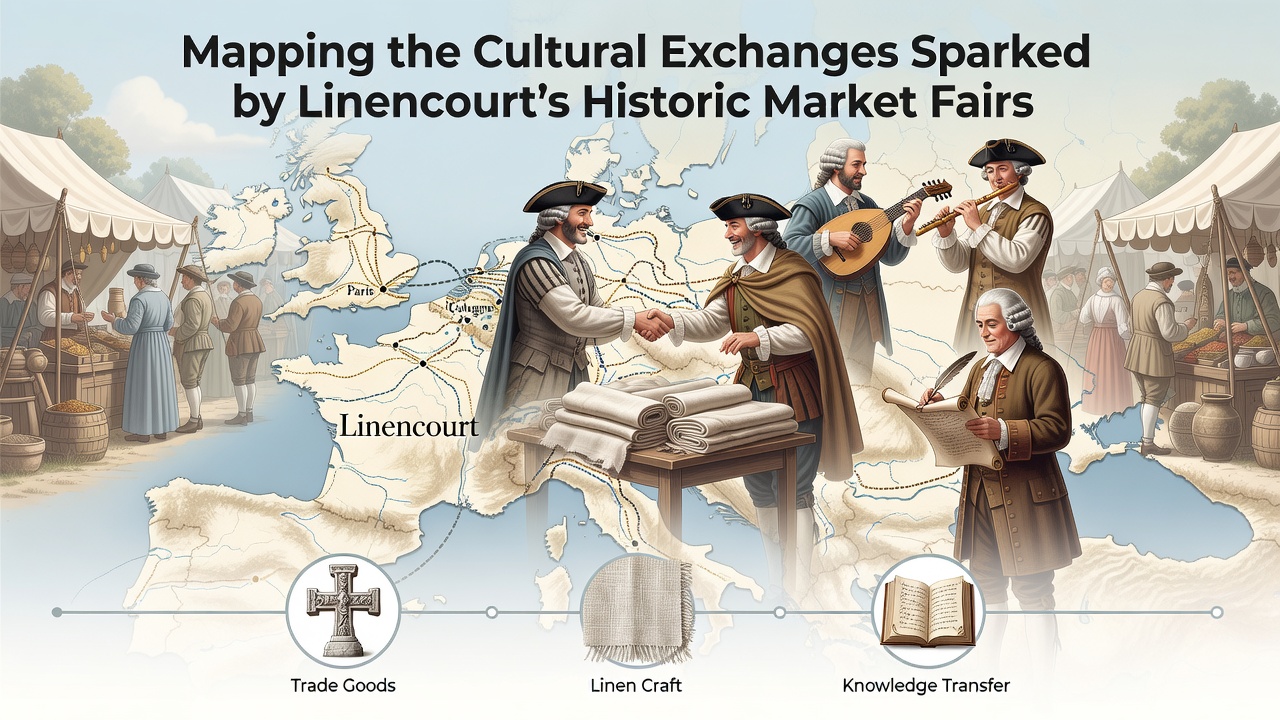
Linencourt's market fairs emerged as central hubs for regional interaction beginning in the late medieval period, and they continued to shape local economies and social patterns through the early modern era. Records indicate that these gatherings drew merchants from surrounding territories along established trade routes, bringing together diverse groups who exchanged not only commodities but also languages, recipes, and performance traditions. Historians note that the fairs operated on fixed schedules tied to agricultural cycles, which allowed for predictable movement of people and ideas across what is now northeastern France and adjacent areas.
Origins and Expansion of the Fairs
Documents preserved in regional archives show that the earliest documented Linencourt fairs date to the 1300s, when local lords granted permissions for seasonal markets that attracted cloth dealers, spice traders, and livestock sellers. Over subsequent centuries the events grew in scale, incorporating additional days and expanding physical grounds to accommodate growing attendance. By the 1600s participants arrived from territories as distant as the Low Countries and northern Italian cities, and this influx introduced new textile patterns and agricultural techniques that local farmers later adopted. Archival ledgers list specific tolls collected on imported items such as wool, salt, and metalwork, demonstrating the fairs' role in channeling goods along north-south corridors.
Forms of Cultural Exchange Documented at the Events
Observers recorded that musicians from different regions performed side by side during evening gatherings, blending melodic structures that later influenced local folk repertoires. Cooks shared preparation methods for preserved meats and baked goods, resulting in hybrid dishes that appeared in household inventories decades afterward. Language contact occurred through daily bargaining, and glossaries compiled by traveling scribes contain loanwords from Flemish and Occitan that entered everyday usage in Linencourt households. Religious processions sometimes overlapped with market days, creating opportunities for the display of devotional objects and iconography that circulated beyond their original communities.
Trade Routes and Demographic Shifts
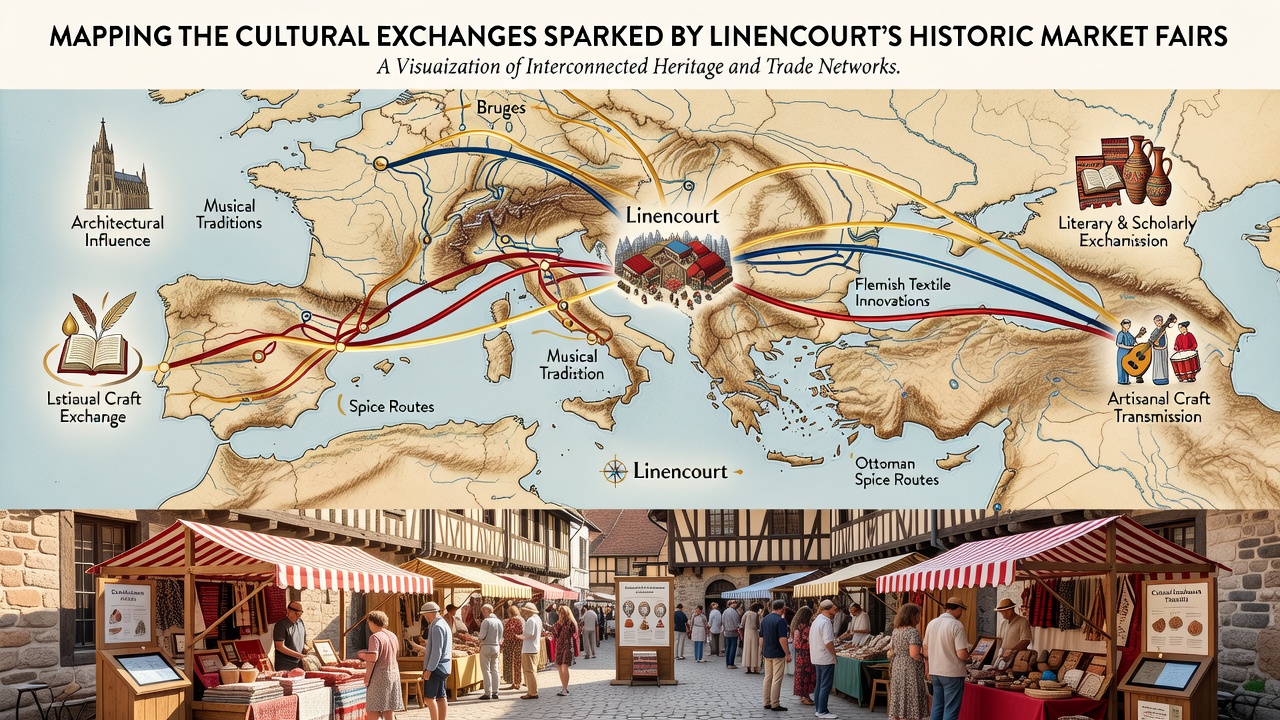
Cartographic reconstructions based on surviving customs rolls reveal that Linencourt sat at the intersection of two major overland paths, one running toward the Rhine and another toward the Mediterranean ports. These routes facilitated the movement of seasonal workers who returned home with new skills in dyeing and leatherwork. Population registers from the 1700s list temporary residents who settled permanently after repeated visits, contributing to shifts in surname distributions still visible in modern municipal records. Data compiled by regional heritage organizations indicate that intermarriage rates rose measurably in the decades following major fair expansions.
Researchers continue to cross-reference account books with personal correspondence to trace how particular families maintained commercial ties across generations. One study released by a French academic consortium examined probate inventories and found repeated references to imported household items whose stylistic features originated hundreds of kilometers away. Such evidence supports the view that the fairs functioned as sustained contact zones rather than isolated annual events.
Contemporary Mapping Projects and October 2026 Developments
Digital initiatives launched in recent years combine geographic information systems with digitized ledgers to plot the movement of specific goods and cultural practices. Teams from multiple European institutions have contributed layers that highlight linguistic borrowings and musical motif transmissions. A coordinated exhibition scheduled for October 2026 will present updated interactive maps that incorporate newly digitized traveler diaries, allowing visitors to follow individual merchant journeys through time-stamped waypoints. Project leads expect these visualizations to clarify previously undocumented connections between Linencourt and communities in the Swiss cantons.
Additional datasets from university collections in Canada have been integrated to compare Linencourt patterns with parallel fair systems in North America, revealing shared mechanisms of cultural diffusion. These comparisons rely on standardized metadata protocols that permit cross-regional queries without altering original source interpretations.
Conclusion
The cumulative record demonstrates that Linencourt's historic market fairs served as durable platforms for cultural transmission across centuries. Mapping efforts now underway convert fragmented archival evidence into coherent spatial narratives that researchers and the public can explore together. Continued digitization promises to surface further connections that have remained hidden in dispersed collections, extending the fairs' documented influence into new analytical frameworks.